Where Would You Go?
If one day you decided to lay aside all mundane activities in order to dedicate yourself to the full-time pursuit of studying and imbibing the most important instructions of your lineage, do you know where you would go?
For Kagyupas, the heart of our Dharma is the path of method (the six yogas of Naropa), and the path of liberation (mahamudra). Where can we go to receive and practise these instructions in a thorough and systematic fashion, for a prolonged period of time?
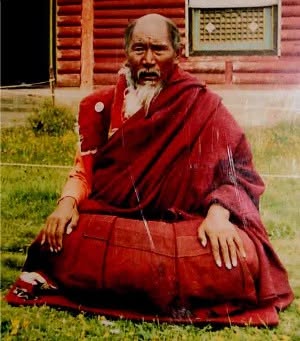
Do you know what I mean when I say thoroughly and in a systematic fashion? To give an example, I’m thinking of how Khenpo Munsel (1916-1994) used to guide his students through the dzogchen instructions.
For those of you who don’t know, to receive these teachings from him you generally had to commit to staying with him for a minimum of twelve years. If you had gone forth (i.e were a monk or a nun), for the first four years he would teach and guide you through the preliminary practices. If you were a lay person you would recite 100 million Om Bendza Sato Hum mantras, which also takes about four years if you do it full-time. The lay students would also have to stay with Khenpo Munsel, in his Dharma encampment, while doing this. Then he would guide you through the stages of calm-abiding meditation and then the actual practice, which in this case would be dzogchen. When it came to the actual practice, he would guide each student one-to-one, based on their own personal development.
Khenpo Munsel was a rather intimidating figure. He was very no nonsense. He would not impart the teachings easily. There is a well known account of once when a certain very learned khenpo, who was also a high tulku, travelled to Golok, to Khenpo Munsel’s Dharma encampment, to request dzogchen instructions. He said he would be willing to answer any questions that Khenpo Munsel might wish to ask him on the sutras and tantras by way of examination, to see if he was fit to receive the instructions. Khenpo asked him what the four powers and six doors of wrongdoing are. I don’t know the details, but basically Khenpo Munsel was unsatisfied with either his answer or his general approach, and sent him packing. You can imagine how word of this spread.
Anyway, this is the type of setting I am talking about. This was the norm for us Kagyupas in bygone days. A lama would reside on an isolated mountainside somewhere, and those who were dedicated, thirsty for the lineage teachings of the paths of method and liberation, would seek the lama out and go to live on that same hillside, so as to be able to receive the lama’s instructions and put them into practice. If you wished to do this today, where would you go?
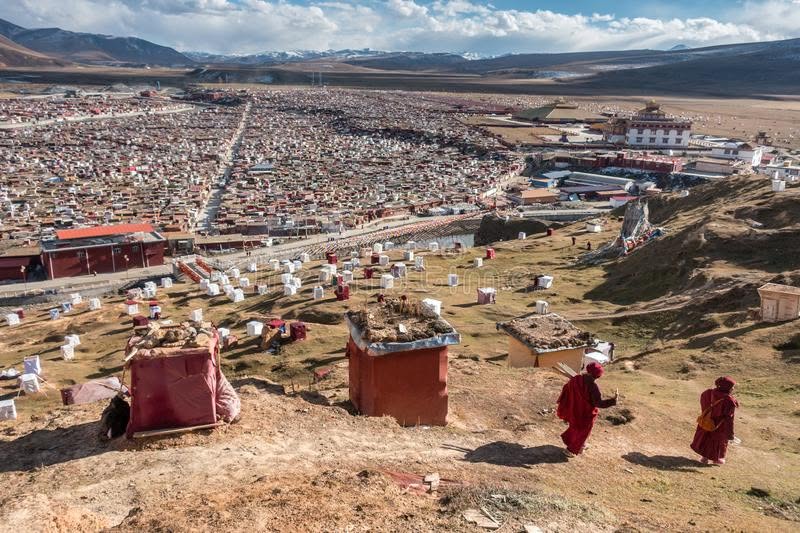
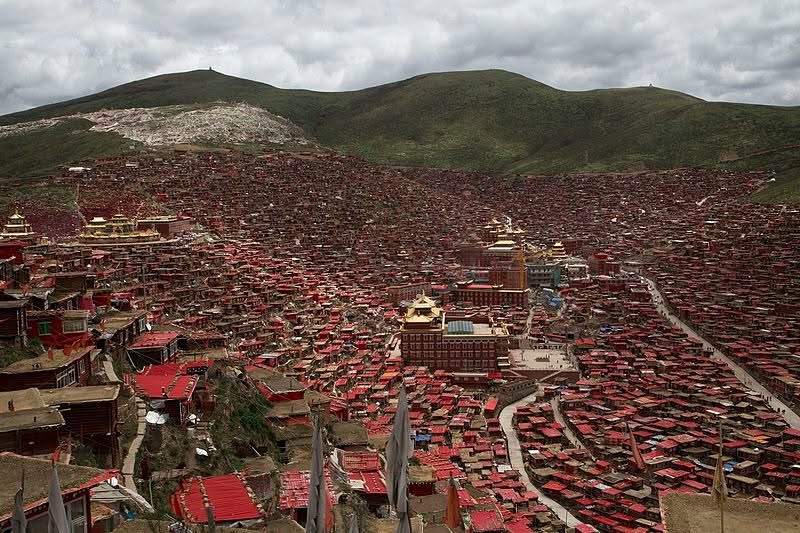
Sadly, Khenpo Munsel is no longer alive, but the Nyinmapas have other places where they can go to receive their highest teachings, dzogchen, in a comprehensive and systematic fashion. There is Yarchen Gar, for instance, where about 10,000 monks and nuns stay. They spend all their time receiving meditation instructions and practising under the guidance of experienced lamas. The teachings are being imparted all the time, throughout the whole year. Or they can go to Serta Larung Gar, where they have a five year programme dedicated to the Seven Treasures of Longchenpa. Yes, people can go to Serta to receive teachings on the main Nyingma commentaries of the sutra based teachings, but those who choose to enter the programme dedicated to Longchenpa’s main texts receive special support in terms of provisions, and so forth. This is done to ensure that these teachings at least survive, if not thrive. Do you know of any such initiatives to ensure the survival of Gampopa’s teachings? Should you wish to dedicate a number of years to receiving and practising the teachings of Gampopa full-time, where could you go?
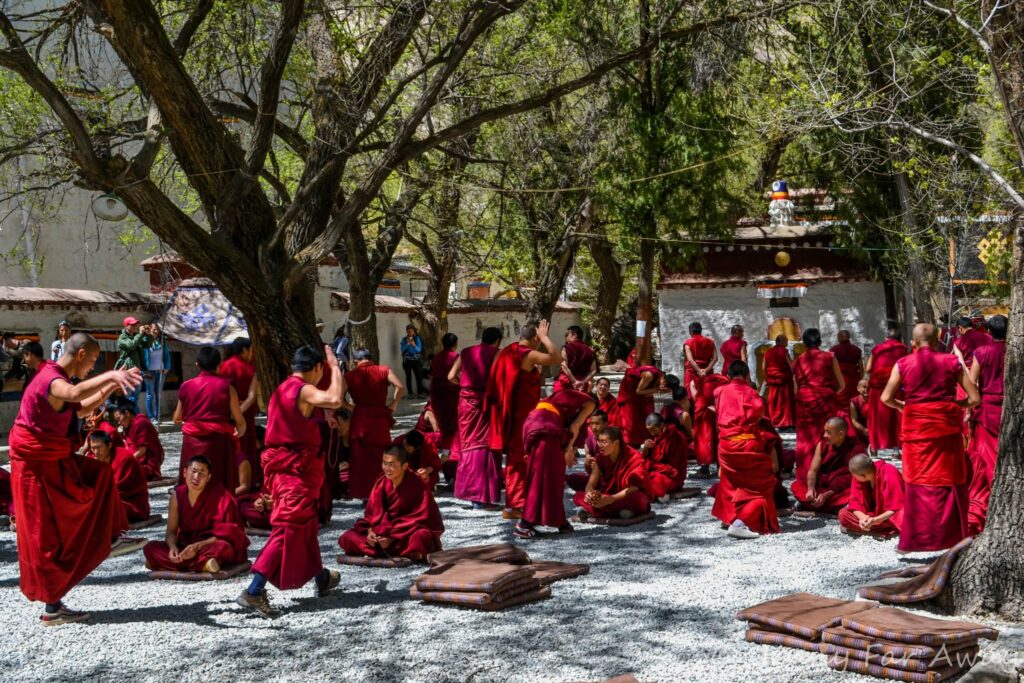
It goes without saying that the Gelukpas have places where they can receive their main teachings. They primarily focus on the study of the treatises, and they have the three main seats of Ganden, Sera and Drepung where there is an abundance of opportunities in this regard.
The highest teachings for the Sakyapas are those of Path and Its Result (lamdre). Is there a place where the Sakyapas can go to receive and practise these teachings fully and systematically. Yes! On a hillside not far from Dzongsar Monastery in Tibet there is a Dharma encampment where Jamyang Mawai Senge has been guiding disciples in these practices full-time for many years. I hear there are many people who have committed themselves to life retreat. Sakya Trinzin Rinpoche honoured this lama with the informal epithet 'Lamdre Lama'.
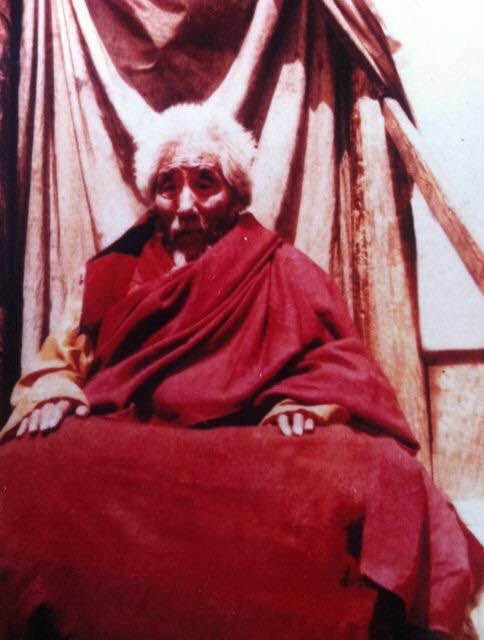
Not all that long ago, we Kagyupas had the beginnings of such a Dharma encampment ourselves. A number of dedicated disciples had gathered around Khenpo Karma Tseten (1912-1991). They lived extremely simply in a very remote area. Khenpo Karma Tseten was highly learned and accomplished, and he was nurturing those who had come to stay with him. The number of students was increasing all the time but unfortunately he passed away before the community became fully established. His disciples gradually dispersed to other places where they could receive similar opportunities. To places such as Arik Gar where Khenpo Pema Tsewang was teaching, to Serta Larung Gar, to Khenpo Chokyab’s Dharma camp, and so on. So mainly to places where Nyingma lamas were teaching.
I myself was planning to travel to meet and spend some time with Khenpo Karma Tseten, but I received news a week or two before I was about to go that he had passed away – a profound loss for us Kagyupas indeed.
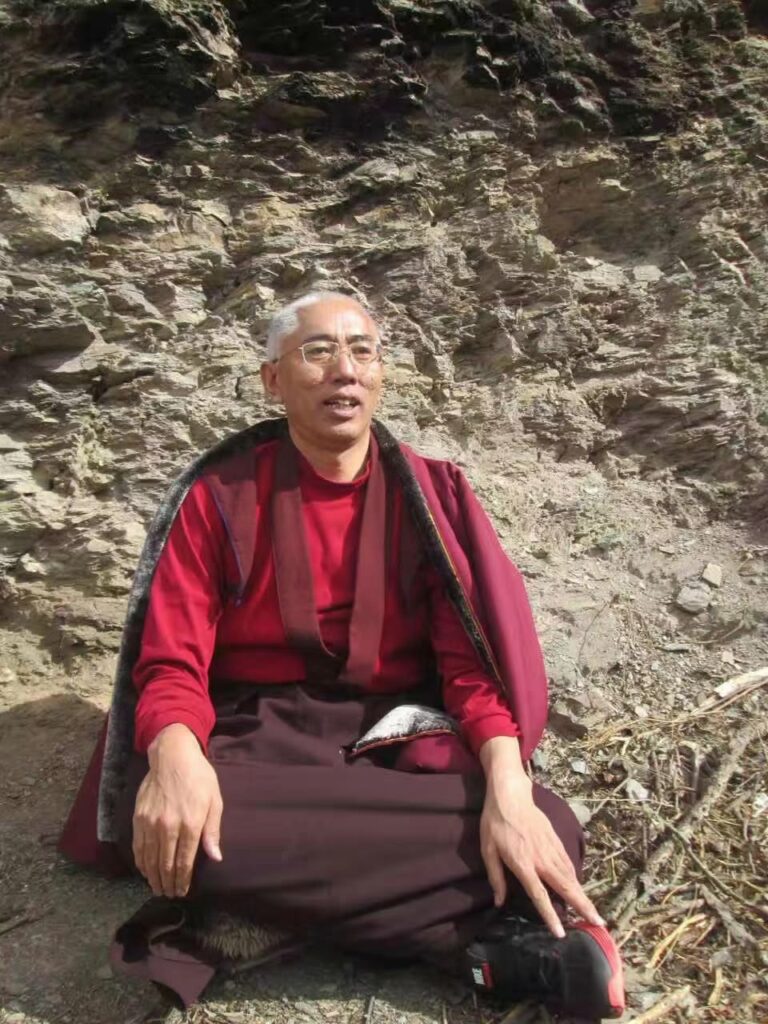
All hope is not lost though, there is a disciple of Karma Tseten called Tulku Tashi Norbu of Chache Monastery, who travelled to Nepal, received instructions from Chatral Rinpoche and spent many years in mountain retreat in Yolmo. After Chatral Rinpoche passed away he returned to Tibet and wandered with no fixed abode, roaming mountain solitudes all by himself. He refused to teach for many years, but not so long ago he started to accept disciples. I have heard that to become a disciple of his you must commit to abandoning your monastery (it is mostly monks who seek him out) and to spend the rest of your life as a mountain hermit.
With no fixed abode, he and his disciples spend their time studying and practising the teachings in solitude. I cannot tell you the joy I felt when I first heard about this.
There are one or two other Kagyu lamas that I also have hopes for. There is my Dharma friend Khenpo Choden from Surmang Gompa, for instance. He studied extensively with Khenpo Pema Tsewang, returned to Surmang, established the shedra there, nurtured a few khenpos who could take his place of leading the shedra, and then headed for the mountains to practise in solitude. Many people have great faith in him and are desperate to receive his instruction. Let’s see what happens.
It is not that we are in competition with the other lineages. But if we see the other schools doing a better job of maintaining their principle teachings and practices, we can take inspiration from that, and try to do more ourselves in the areas where we are not doing as much as we could. Basically, if those of us who consider ourselves to be Kagyupas do not study and practise the teachings of Marpa, Milarepa, Gampopa, Dusum Khyenpa, Pagmo Drupa and the other past Kagyu masters, who will?
2022 Spring, Thrangu Sekhar Retreat Centre, Nepal
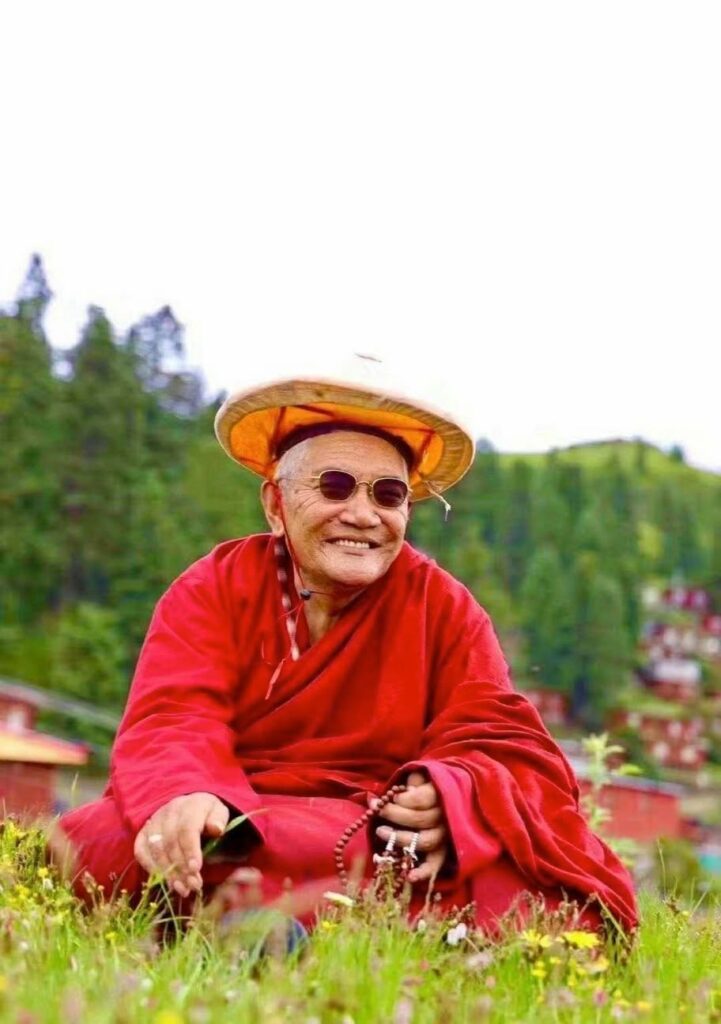
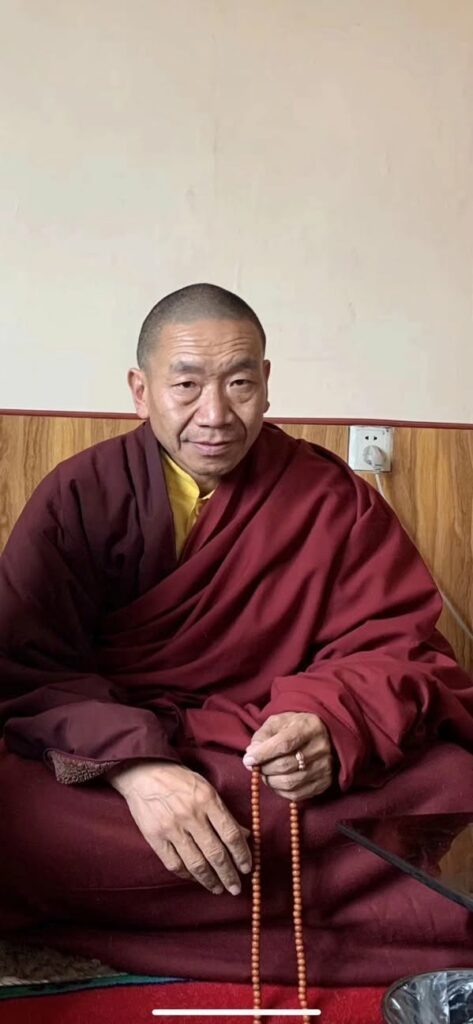
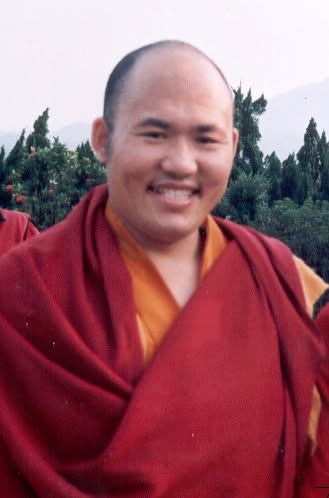
Photos: Khenpo Munsel, Khenpo Karma Tseten, Tulku Tashi Norbu, Yarchen Gar, Lamdre Lama Jamyang Mawai Senge, Serta Larung Gar, Khenpo Choden, Sera Monastery
Khenpo Karma Tseten’s biography (in Tibetan):
མཁན་པོ་ཀརྨ་ཚེ་བརྟན་གྱི་མཛད་རྣམ་མདོར་བསྡུས།