Calling the Lama From Afar – Weekend Retreat in Hong Kong
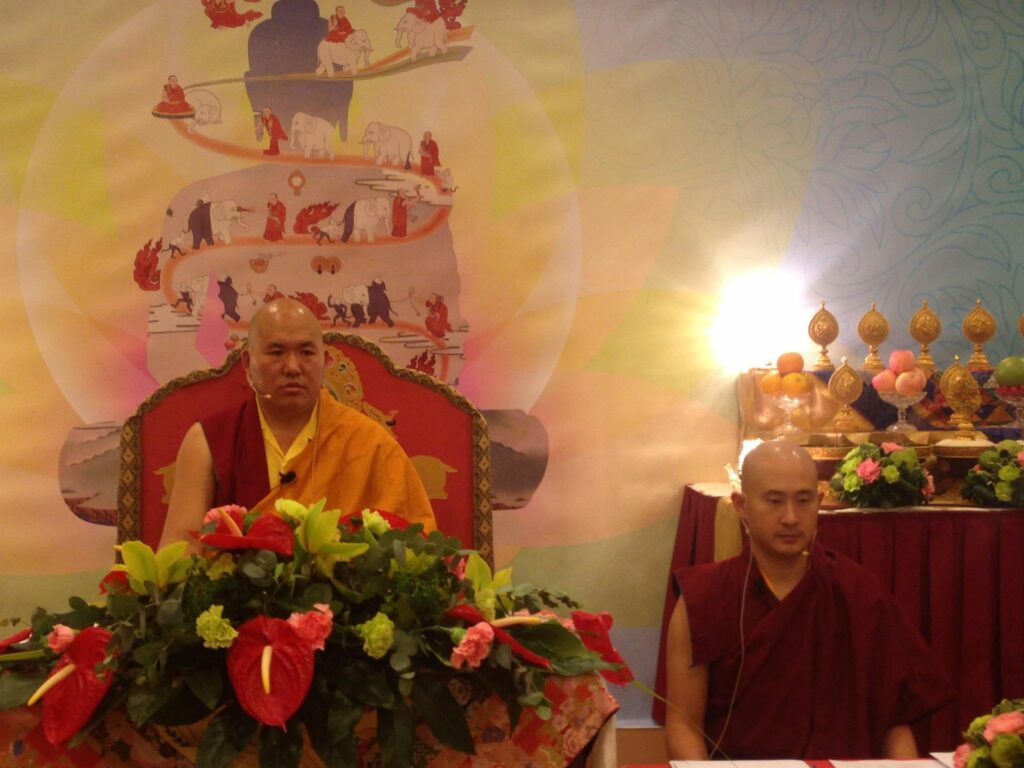
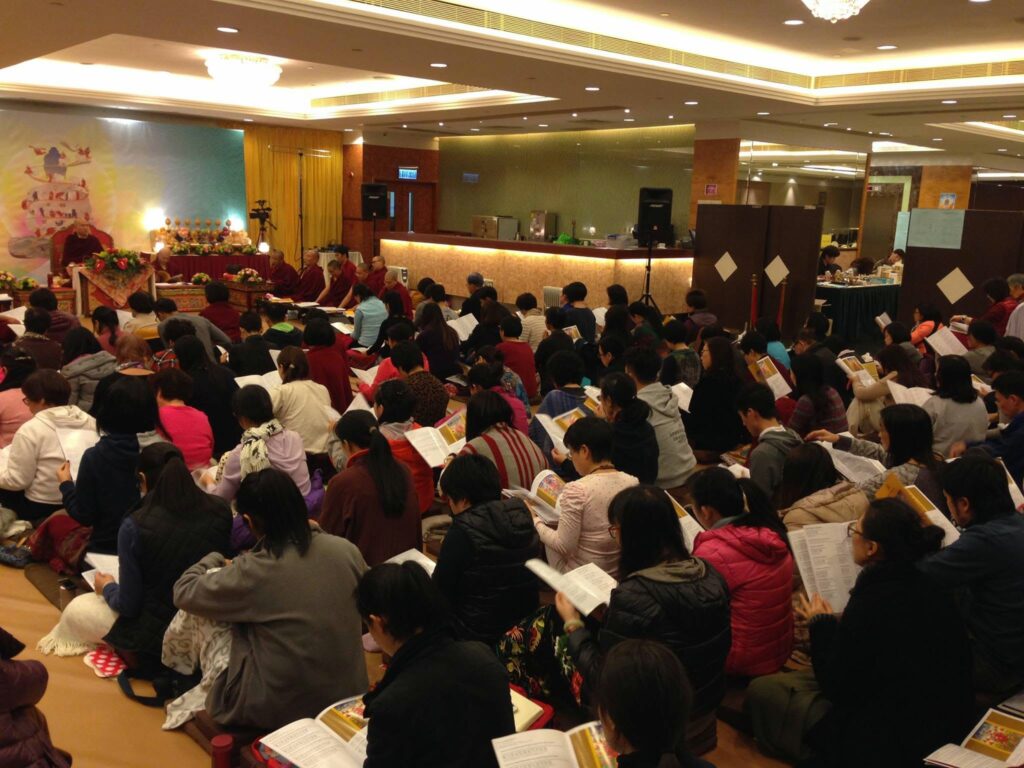
Drupon Rinpoche was invited to preside over a weekend retreat in Hong Kong by Thrangu Hong Kong Dharma Centre. The text used as the basis for the teachings during the retreat was Jamgon Kongtrul’s Calling the Lama From Afar supplication.
To start however, Rinpoche gave some initial instructions regarding the physical posture and mental motivation that should ideally be maintained throughout the retreat. He explained how the seven and five point sitting postures are needed not only when we meditate but when we are listening to the teachings as well, because the function of the different points of the posture each subdue one of the mind poisons and we will not be able to receive the teachings properly if our mind is caught up in the mind poisons. Rinpoche then proceeded to explain the points of the posture and gave tips on how to relate with the importance of the posture taking examples from the world.
Regarding our mental attitude Rinpoche advised us to refer to the life stories of our past lineage masters such as Marpa, Milarepa, and Gampopa. Stating that if we really wish to accomplish the Dharma we have to follow in their footsteps. Giving Milarepa as an example and how he made aspirations to be able to remain in isolated retreat and die engaged in the practice, Rinpoche emphasised that if we are going to be followers of these masters it is their attitude and outlook that we have to try and adopt; it is not only a matter of emulating their external activities. This is a point that Rinpoche stressed throughout the teachings – what we do externally does not determine how we are doing as practitioners but it depends on our way of thinking.
Rinpoche gave a scenario in the introduction to the retreat regarding the posture to clarify this. If someone were to think, “I’m not going to sit in the vajra posture because I might damage my knees and then I will find it difficult to do my work etc,” then such a view shows that they consider the worldly activities of this life to be more important than their meditation and that which takes one to liberation. But at the same time someone else could similarly think, “I’m not going to sit in the vajra posture because it might damage my knees,” but if their reason for thinking that is, “and that will obstruct my practice of Dharma,” that person can be considered a Dharma practitioner because they are prioritising practice and liberation. Both individuals are thinking of protecting their knees but their reason for doing so is totally different. In this way there can be someone who seems to be doing something totally worldly, or even harmful, and they can be doing Dharma, and there can be someone who seems do be doing something very Dharmic and it is in fact worldly. This is because the Dharma is all about what is taking place within our minds.
In this same vein Rinpoche pointed out how we must have a long-term view regarding our Dharma path and how for most of us this seems quite difficult even though we can manage it in the worldly aspects of our life. Using the physical posture as an example again Rinpoche said as soon as we have a few pains in our legs we think, “I better stop sitting like this else I will end up a cripple,” but when we are doing physical exercise and our muscles etc start to ache we think, “If I can just persist then I will become stronger and more flexible and the exercise will be effective.” This second thought is true for exercise but it also true for the sitting posture and if we believe what the Buddha taught the seven point posture is the very best form of exercise and can remedy physical illness as well as the kleshas.
Rinpoche gave a brief overview of the eight chariots of practice (also know as the eight practice schools) as we reached their corresponding verse in the supplication. He summarised that section of the text by saying that this Calling the Lama from Afar supplication is not limited to any particular school or tradition and that it is therefore suitable to be used for which ever lineage of Tibetan Buddhism we belong to.
Rinpoche taught how the first part of the supplication was focused on the wonderful qualities of the lama and lineage lamas and the second section is focused on our own shortcomings and asking for blessings from the lamas to be able overcome them.
The teachings were translated into Mandarin by Khenpo Tengye, into Cantonese via FM radio transmission by Tse Siu Lam Neil, and into English by Kunga.
Overview written by Kunga.